
The Legacy of Svalbard
متن موزیک
I have finally come to terms with the idea
that I'll never know what Freddie Mercury meant.
I fell in love with Queen as an eight year old and Freddie Mercury
still has the honour of being my most important musical influence.
Given all the personal meaning I invested in his creative output,
I thought that Freddie would think about it in much the same way.
However, when it came to talking about
his music and lyrics, Freddie was vague.
And flippant.
Annoyingly vague and flippant.
He boasted about the disposability of his
music, famously likening his songs to Bic Razors.
It was an irksome message: "
You listen to it, like it, discard it, then on to the next.
Disposable pop."
In his earliest interviews,
he spoke of the difficulty and
irritation associated with lyric writing.
In later interviews, he spoke of the routine nature of creativity,
the analogy that struck me most was that making
music was much like churning out sausages in a factory.
He consistently avoided disclosing any personal meanings and
associations, urging listeners to develop their own interpretations.
At the same time,
there was a tantalising suggestion that
there was some autobiographical meaning there: "
People are always asking me what my lyrics mean.
Well I say what any decent poet would say if you dared ask him
to analyse his work: if you see it, darling, then it's there."
I've spent a lot of time with Freddie.
I've read a lot of books and listened to a lot of interviews.
I have talked to a lot of people about his attitude towards lyricism
and musical creativity: from musical collaborators,
biographers,
documentarians to representatives from Queen Productions.
Some fascinating revelations came from that research,
one contributor even theorised that Freddie's reluctance to
disclose the nature of his
creative process was due to a superstition.
Apparently, he feared that if he described his
working process, he would lose that ability to create...
and here I imagined that he just wanted to keep it all to himself,
not make his feelings conversational
fodder for untrustworthy music journalists.
I was in this never-ending search for this lost sound byte,
where Freddie gives up the coy
bravado and reveals something consequential.
I'd find flecks of honesty here and there,
a re-imagining of Freddie pulling up a piano to his bed,
to play melodies if inspiration ever struck during the night.
Of course there's that immortal anecdote of Crazy Little
Thing Called Love being composed in a tub at the Munich Hilton.
It was not because it particularly affected my relationship with his
music, but I just never bought his
dismissive "forget this, it means nothing" routine.
Given the passion and complexity of his work and the immense effort
it took to create it,
I fail to see how he honestly believed his music was disposable.
But perhaps it was just me, perhaps it was just me!
Perhaps I had just spent so much time with this music and I had
theorised about it so much that I wanted to feel
as if he invested something personal in his art.
There was always that possibility that he only viewed music as a
money-making venture,
but I was forever hopeful that he had
approached it as a sentimental artist.
While everybody else I talked to could accept what he said at face
value, it was harder for me to accept that maybe,
he just didn't care as much as I did and maybe,
just maybe, I didn't know him as well as I thought I did.
Ironically enough,
there was once a time when I didn't really
care what Freddie thought of his own lyrics.
As a teenager,
I wrote wildly preposterous online
essays interpreting various Queen lyrics.
I employed provocative techniques to get readers enraged and engaged.
I wanted them to tell me I was wrong: "
That was not what Freddie meant!".
For me, it was not about being right, as such,
it was about motivating listeners to
articulate their personal understanding of these songs.
The passion and the authority with which
readers spoke about his lyricism really inspir
از این آلبوم
His Dark Materials
The Musical Anthology of His Dark Materials (Music From The Television Series) • Lorne Balfe
The Alethiometer
The Musical Anthology of His Dark Materials (Music From The Television Series) • Lorne Balfe
Lyra: The Child of Prophecy
The Musical Anthology of His Dark Materials (Music From The Television Series) • Lorne Balfe
The Settling of a Daemon
The Musical Anthology of His Dark Materials (Music From The Television Series) • Lorne Balfe
Scholastic Sanctuary
The Musical Anthology of His Dark Materials (Music From The Television Series) • Lorne Balfe
The General Oblation Board
The Musical Anthology of His Dark Materials (Music From The Television Series) • Lorne Balfe
The Life of Roger Parslow
The Musical Anthology of His Dark Materials (Music From The Television Series) • Lorne Balfe
The Machinations of Lord Boreal
The Musical Anthology of His Dark Materials (Music From The Television Series) • Lorne Balfe
A Gilded Cage
The Musical Anthology of His Dark Materials (Music From The Television Series) • Lorne Balfe
The Strength of Gyptians
The Musical Anthology of His Dark Materials (Music From The Television Series) • Lorne Balfe
A Plea to Fate
The Musical Anthology of His Dark Materials (Music From The Television Series) • Lorne Balfe
Mrs. M.Coulter
The Musical Anthology of His Dark Materials (Music From The Television Series) • Lorne Balfe
The Magisterium
The Musical Anthology of His Dark Materials (Music From The Television Series) • Lorne Balfe
The Path Foretold
The Musical Anthology of His Dark Materials (Music From The Television Series) • Lorne Balfe
Release the Spy-Fly
The Musical Anthology of His Dark Materials (Music From The Television Series) • Lorne Balfe
The Tales of Lee Scoresby
The Musical Anthology of His Dark Materials (Music From The Television Series) • Lorne Balfe
The Compass Points North
The Musical Anthology of His Dark Materials (Music From The Television Series) • Lorne Balfe
The Witches of Lake Enara
The Musical Anthology of His Dark Materials (Music From The Television Series) • Lorne Balfeآهنگهای مشابه
بیشتر: آهنگهای مشابه
The Rescuers
Ambulance (Original Motion Picture Soundtrack) • Lorne Balfe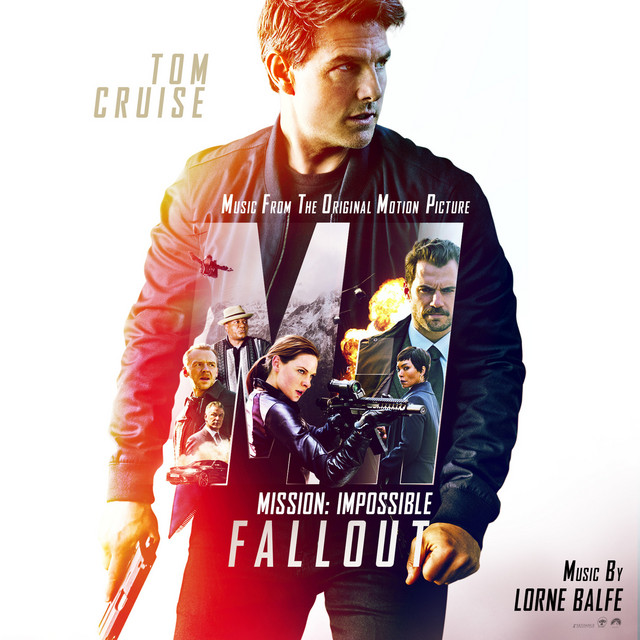
Fate Whispers to the Warrior
Mission: Impossible - Fallout (Music from the Motion Picture) • Lorne Balfe
Argylle's Theme
Argylle (Soundtrack from the Apple Original Film) • Lorne Balfe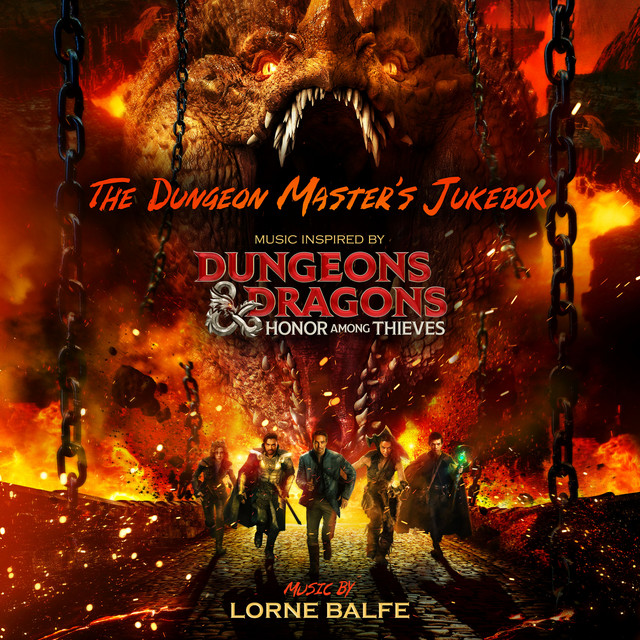
Doric's Theme
The Dungeon Master’s Jukebox (Music Inspired By Dungeons & Dragons: Honor Among Thieves) • Lorne Balfe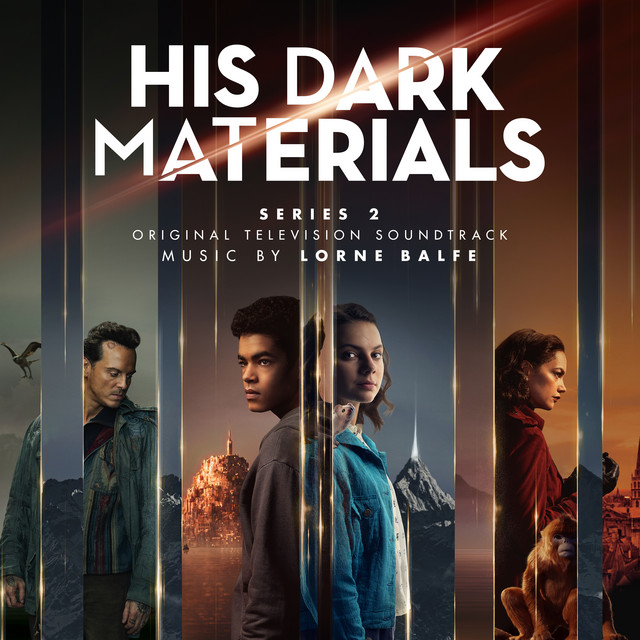
The Key to the Multiverse
His Dark Materials Series 2 (Original Television Soundtrack) • Lorne Balfe
Tornado
Oats Studios, Vol.1 • Lorne BalfeThe Alethiometer
The Musical Anthology of His Dark Materials (Music From The Television Series) • Lorne Balfe
Pride of Pittsmore
Rumble (Music from the Motion Picture) • Lorne Balfe
Look to the Stars
His Dark Materials (Original Television Soundtrack) • Lorne Balfe
No Hard Feelings
Mission: Impossible - Fallout (Music from the Motion Picture) • Lorne Balfe
Gemini Man
Gemini Man (Music from the Motion Picture) • Lorne Balfe
Holga's Pride
The Dungeon Master’s Jukebox (Music Inspired By Dungeons & Dragons: Honor Among Thieves) • Lorne Balfe
Dinosaurs
Life On Our Planet (Soundtrack from the Netflix Series) • Lorne Balfe
The Syndicate
Mission: Impossible - Fallout (Music from the Motion Picture) • Lorne BalfeThe Life of Roger Parslow
The Musical Anthology of His Dark Materials (Music From The Television Series) • Lorne Balfe
Opposing The Authority
The Musical Anthology of His Dark Materials Series 3 • Lorne Balfe
Of Cardinal Importance
His Dark Materials Series 3: Episodes 3 & 4 (Original Television Soundtrack) • Lorne Balfe
Reptiles
Life On Our Planet (Soundtrack from the Netflix Series) • Lorne Balfe
Asriel's Republic
The Musical Anthology of His Dark Materials Series 3 • Lorne BalfeThe Machinations of Lord Boreal
The Musical Anthology of His Dark Materials (Music From The Television Series) • Lorne Balfe